
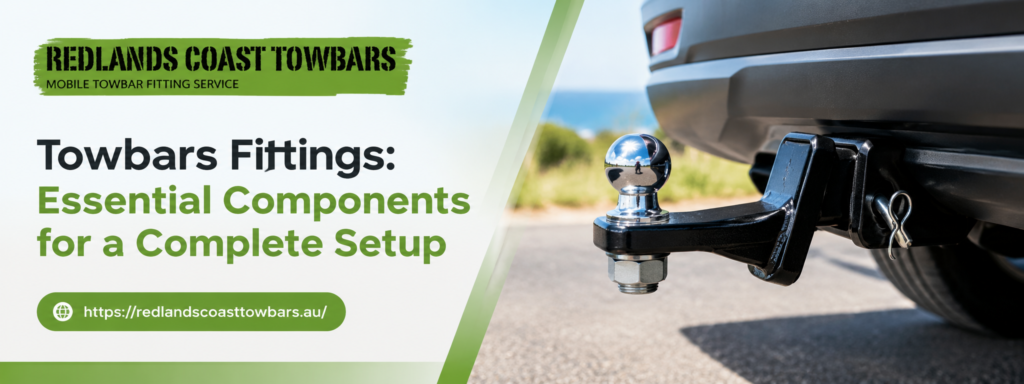
A towbar may be the most visible part of a towing setup, but it is only a part of the whole system. Electrical connection, braking equipment, weight-management components, towing accessories — all have their own roles. When you understand how these parts fit together, you can make better decisions for towbars fittings.
The right combination is not always the same; it depends on your vehicle and towing applications. You’ll find some equipment essential and others only useful for particular requirements. This guide focuses on specific areas separately, explaining the components — you’ll understand what may be needed and why.
Start With the Main Towbar for Your Towing Requirements
A towbar is what creates the main connection between your vehicle and trailer. Make sure it is the perfect match according to your vehicle’s design. It also needs to have appropriate ratings for the load you plan to tow. The fitting method of the towbar must align with your vehicle’s designated mounting points.
If you are looking for quality towbar fitting Redland Bay, these are the key components to consider:
- Towbar: The main assembly attached to the vehicle. It provides the mounting structure and connection point for towing equipment.
- Tow Ball: The removable component that connects directly to the trailer’s coupling.
- Hitch Receiver: It provides a connection point for compatible hitch-mounted equipment.
- Mounting Hardware: Secures the towbar to the vehicle at the appropriate mounting points.
Each component has a specific role, and this is why you need to choose them carefully after considering your towing needs and your vehicle specifications. Redlands Coast Towbars can help you work through this stage and decide on the right components.
Connect the Trailer Electrically with Towbars Fittings
When your trailer has lights and other electrical functions, it needs a reliable connection to the vehicle. For that, you need essential electrical components that allow power and signals to pass between the vehicle and the trailer.
The electrical setup may include:
- Trailer Plug: To connect the trailer’s electrical system to the vehicle.
- Trailer Socket: To provide the vehicle-side connection for the trailer plug.
- Wiring Harness: To carry electrical signals between the vehicle and trailer.
- Wiring Adapter: To allow compatible connections when the vehicle and trailer use different plug configurations.
When changing the towing setup or adding new equipment, checking the existing wiring is very important. Talk to an expert technician before you get an electrical wiring system Cleveland. Make sure all the electrical components match your vehicle and trailer.
Add Trailer Braking Components for Better Control
Some trailers use electric brakes. If your trailer has the same, you’ll need a dedicated controller to operate them. Trailer braking components are particularly important for towbars fittings when the trailer relies on electric braking.
Depending on the setup, you may need:
- Brake Wiring: It connects the brake controller with the trailer’s electric braking system.
- Brake Plug: It provides the electrical connection between the vehicle and trailer.
- Brake Controller: It allows the driver to control the trailer’s electric brakes through the vehicle.
Not every brake controller works with every towing setup. Avoid choosing equipment that doesn’t suit your setup. The vehicle, trailer, and braking system — consider all these factors to make the right choice for a trailer brake controller Redland Bay.
Manage Weight and Towing Stability with the Right Equipment
You’ll find equipment that helps distribute weight between the vehicle and the trailer. They don’t move the trailer’s actual load from the trailer to the vehicle. Instead, they redistribute some of the downward load at the tow ball — across the vehicle’s front and rear axles and the trailer axle group. Whether you need such equipment or not depends on the trailer, vehicle, and the towing requirements.
Common load-management components include:
- Weight Distribution Hitch: It distributes suitable loads across the towing combination.
- Weight Distribution Bars: They work with the hitch — they assist with distributing the load.
- Hitch Head: It connects the weight distribution hitch to the vehicle’s receiver — it holds the tow ball and other hitch components in place.
- Safety Chains: It provides a secondary connection between the vehicle and trailer — it helps keep the connection if the main coupling fails.
Does your trailer place a downward load on the tow ball that causes the vehicle’s rear part to sit lower? Does it affect the balance of the towing setup? — If yes, you may need a weight distribution hitch Redland Bay.
Add Towing Accessories for Your Specific Requirements
The essential components are in place for towbars fittings — now you need to look at accessories that add capabilities for extra carrying or other practical functions. These are not the mandatory core components, and they are not always required in every setup.
Depending on your towing demands, you may consider:
- Bike Rack: A compatible towbar-mounted system — it’s useful if you want to carry bikes.
- Cargo Carrier: For additional carrying space at the rear of the vehicle — it’s attached to a hitch receiver.
- Towbar Cover: Protects the towbar or hitch receiver from dust, dirt, moisture, and debris.
- Towbar Step: A convenient step used to access the rear of the vehicle
The right setup is more than selecting a suitable towbar; you’ll need to get all the right components for a perfect towbar fitting Redland Bay. Each component has a specific purpose. Understand how they work together and create a setup that works for your intended use.
Need help selecting the right components and putting the right setup together? Redlands Coast Towbars can assess your vehicle and towing requirements — explain the components you may need — and help arrange a suitable professional fitting. Get in touch today to get started.
Frequently Asked Questions (FAQs)
What is the difference between a towbar and a tow ball?
The towbar — it’s the main assembly secured to the vehicle. It provides the structure for towing equipment.
The tow ball — It’s fitted to the towbar, connecting directly to a trailer’s matching coupling. It helps the trailer move with the vehicle.
What does a trailer plug do?
A trailer plug connects the trailer’s electrical system to the vehicle. It allows power and electrical signals to operate trailer lights and other functions.
Are weight distribution hitches needed for every trailer?
Not for every trailer; weight distribution hitches are intended for particular towing setups. You can get one when the tow-ball load needs to be distributed more evenly across the vehicle and trailer. It helps with better balance and handling.
What is the purpose of safety chains when towing?
Safety chains are for a secondary or backup connection between the vehicle and trailer. If the main coupling becomes disconnected, they help keep the trailer connected to the towing vehicle.
Are towing accessories different from essential towing components?
Yes, they are different. Essential components help the towing system function. On the other hand, bike racks, cargo carriers, towbar covers, and other accessories help with additional practical uses.